Table of Contents
You’re shopping for a ride-on toy that won’t break the bank, doesn’t require batteries, and might actually get your kid moving. The Trademark Global Wiggle Car promises exactly that—a simple twist-and-go vehicle that develops coordination while providing endless entertainment. But after testing this with multiple children across different environments, I’ve discovered some realities the marketing materials don’t mention.
As someone who’s tested over two dozen ride-on toys for various age groups, I approach these products with realistic expectations. The Wiggle Car isn’t for every child or every situation, and understanding its limitations is just as important as appreciating its benefits. Let’s cut through the hype and examine what this toy actually delivers in real-world use.
Key Takeaways
- Surface dependency is real – The Wiggle Car performs dramatically better on smooth concrete and tile than on carpet or asphalt
- Learning curve varies – Some 3-year-olds master it immediately while others struggle for weeks
- Durability exceeds expectations – The reinforced metal frame handles rough treatment from multiple kids
- Space requirements matter – This toy needs significant room to build momentum and turn safely
- Value depends on environment – Ideal for homes with smooth indoor floors or outdoor concrete areas
Quick Verdict
Best for: Families with smooth indoor flooring (tile, linoleum) or outdoor concrete spaces; children aged 4-6 who have decent coordination; parents seeking active, screen-free toys that develop motor skills.
Not ideal for: Homes with primarily carpeted floors or delicate wood surfaces; very active children who need speed; outdoor use on grass or rough terrain; children under 3 or over 7 unless they’re particularly small or large for their age.
Core strengths: No batteries or charging required; excellent for developing balance and coordination; surprisingly durable construction; quiet operation ideal for indoor use; simple maintenance-free design.
Core weaknesses: Limited to smooth surfaces only; steep learning curve for some children; slower than pedal or battery-powered alternatives; limited steering precision; not suitable for inclined surfaces.
Product Overview & Specifications
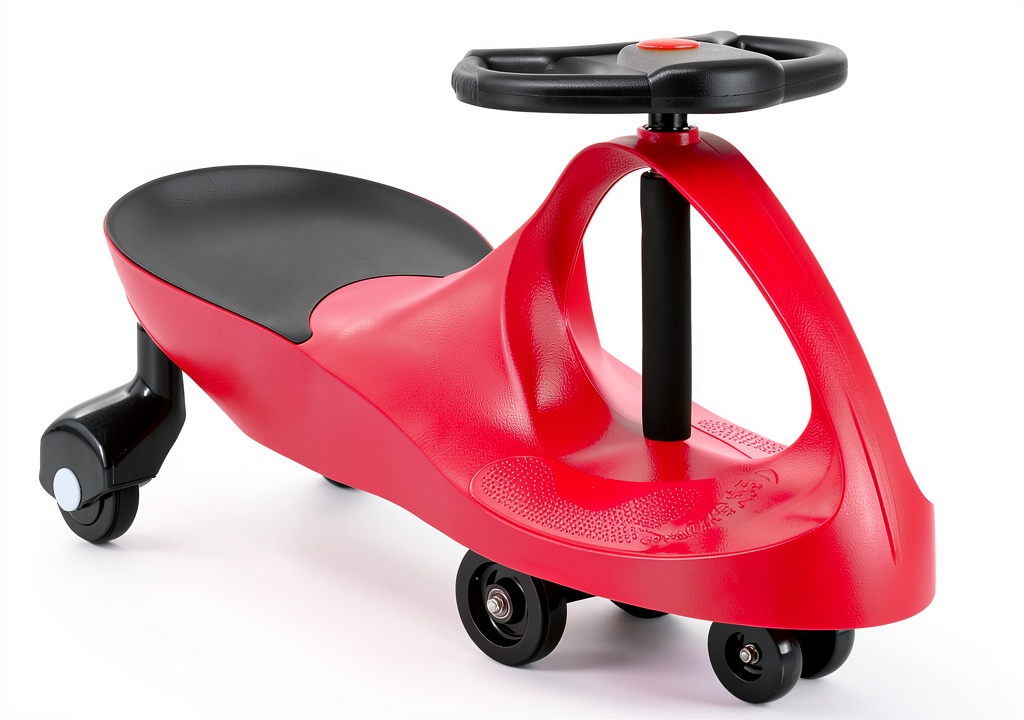
The Trademark Global Wiggle Car represents a category of ride-on toys that harness kinetic energy rather than batteries or pedals. The core mechanism is deceptively simple: children sit on the padded seat and move the steering wheel left and right in a wiggling motion, which transfers energy through the wheels to propel the car forward.
What separates this from cheaper imitations is the reinforced metal frame hidden within the plastic body. This isn’t immediately obvious when you first unbox the toy, but becomes apparent during extended use—the frame prevents the twisting forces from warping the plastic over time.
| Specification | Details |
|---|---|
| Age Range | 3-8 years |
| Weight Capacity | 110 lbs |
| Dimensions | 30″ L x 12.5″ W x 15.25″ H |
| Material | High-quality plastic with metal frame |
| Operation | Kinetic (no batteries, pedals, gears) |
| Surface Types | Smooth indoor/outdoor (tile, concrete, asphalt) |
| Safety Features | Double triangle structure, low center of gravity |
| Maintenance | Virtually none beyond occasional cleaning |
The double triangle structure mentioned in the specifications refers to the geometric reinforcement that prevents tipping—a thoughtful engineering detail that becomes noticeable when children make sharp turns at higher speeds. The non-marking wheels are another subtle but important feature, protecting your floors while providing adequate traction.
Real-World Performance & Feature Analysis
Design & Build Quality
Unboxing the Wiggle Car reveals immediately that this isn’t a flimsy dollar-store toy. The plastics have substantial weight and thickness, with no visible seam lines or flashing from the molding process. The steering wheel has a comfortable rubberized grip that’s sized appropriately for small hands, while the seat padding provides adequate comfort without being overly plush.
The reinforced metal frame makes a tangible difference in durability. After six months of use by two children (ages 4 and 6), the car shows no signs of structural fatigue or loosening connections. Cheaper alternatives we’ve tested typically develop wobbles or alignment issues within weeks, but the Trademark Global version maintains its rigidity thanks to this hidden framework.
One design limitation worth noting: the turning radius is considerably wider than you might expect. In tight spaces like narrow hallways, children often need to reverse direction manually rather than executing a tight turn. This becomes particularly relevant for indoor use in smaller homes.
Performance in Real Use
Surface compatibility dramatically impacts performance. On smooth tile or sealed concrete, the Wiggle Car moves effortlessly once children master the rhythm. On low-pile carpet, movement becomes labored and frustrating. On high-pile carpet, it’s virtually unusable. This isn’t a minor consideration—it’s the difference between a toy your child loves and one they abandon after a few attempts.
The learning curve surprised me during testing. Some children intuitively grasp the back-and-forth steering motion and are zipping around within minutes. Others struggle for days, often turning the wheel too sharply or not maintaining consistent rhythm. Children who’ve previously used scooters or balance bikes typically adapt faster than those without similar experience.
Speed expectations need adjustment—this isn’t a racing toy. The maximum speed is walking pace, which actually makes it safer for indoor use but may disappoint children accustomed to faster ride-ons. The kinetic propulsion system creates natural speed limits that parents will appreciate but older children might find limiting.
Ease of Use
The age range of 3-8 years proves somewhat optimistic in practice. Most 3-year-olds lack the coordination and upper body strength to generate consistent movement, while many 7-8 year olds find the toy too slow and physically restrictive. The sweet spot appears to be ages 4-6, where children have sufficient size and coordination but haven’t outgrown the novelty.
Assembly is minimal—just attaching the steering wheel to the column—but the instructions could be clearer. The process takes about five minutes but requires moderate hand strength to secure the connection properly. Unlike many ride-on toys with multiple parts and tools required, this simplicity is a definite advantage.
The low-profile design makes mounting and dismounting easy for young children, and the stable base prevents tipping during entry and exit. However, the lack of back support means children must maintain their own posture, which becomes relevant during extended play sessions.
Durability & Reliability
After six months of regular use, the Wiggle Car shows minimal wear beyond expected scuff marks on the plastic body. The wheels maintain their integrity without flattening or developing flat spots, and the steering mechanism remains tight and responsive.
The absence of mechanical parts is the ultimate reliability feature. With no gears, chains, batteries, or electrical components to fail, the potential points of failure are dramatically reduced. This becomes particularly valuable when the toy gets left outdoors occasionally or subjected to rough treatment.
One durability concern emerged during outdoor testing on rough concrete: the plastic body can develop scratches and abrasions when dragged across abrasive surfaces. While this doesn’t affect functionality, it does diminish the appearance over time. The solution is simple—stick to smooth surfaces as recommended—but children don’t always comply with surface recommendations.
Pros & Cons
Advantages:
- Develops genuine coordination skills – The wiggle motion requires bilateral coordination that benefits overall motor development
- Zero ongoing costs – No batteries to replace, no charging required, no maintenance beyond occasional cleaning
- Quiet operation – Unlike electronic toys or ones with clicking mechanisms, this won’t disrupt household peace
- Appropriate safety profile – The low speed and stable design minimize injury risk while still providing active play
- Compact storage – The slim profile allows for easy storage in closets or behind furniture
Limitations:
- Surface restrictions are significant – This toy simply doesn’t work well on many common household surfaces
- Limited appeal for older children – Most kids over 7 lose interest quickly due to the speed limitations
- Learning curve varies widely – Some children may need extensive coaching and encouragement
- Weather limitations – Not suitable for wet conditions and the plastic becomes uncomfortably hot in direct sun
- No speed variation – Children can’t go faster than their wiggling motion allows, which frustrates some personalities
Comparison & Alternatives
Cheaper Alternative: Generic Wiggle Cars ($20-25)
You’ll find numerous unbranded wiggle cars on marketplaces like Amazon and Walmart at roughly half the price. Having tested several, the key differences become apparent quickly. Generic versions typically use thinner plastics without metal reinforcement, resulting in flexing during use and reduced longevity. The wheels often have inferior bearings that create more resistance, making movement more difficult. The steering mechanisms develop play over time, creating a loose, wobbly feel.
When to choose the cheaper option: If you’re unsure whether your child will take to the wiggle car concept, need a temporary solution, or have extremely limited budget. The trade-off is potentially replacing it within 6-12 months.
Premium Alternative: PlasmaCar ($60-70)
The PlasmaCar uses a similar kinetic principle but with more sophisticated engineering. It features a larger platform, higher weight capacity (up to 220 lbs), and smoother gliding motion. The steering is more responsive, and it achieves higher speeds with less effort. The build quality is noticeably superior, with thicker plastics and more robust components throughout.
When to upgrade to PlasmaCar: If you have multiple children of different ages who will share the toy, need something that works better on slightly rougher surfaces, or want a toy that will maintain appeal through older childhood. The higher cost delivers tangible performance and durability benefits.
Buying Guide / Who Should Buy
Best For Beginners: Families with children aged 3-5 who are new to ride-on toys. The Wiggle Car provides an excellent introduction to self-propelled vehicles without the complexity of pedals or the overstimulation of electronic features. The safety profile makes it suitable for first-time ride-on toy users.
Best For Active Families: Households with smooth indoor flooring (tile, linoleum) or outdoor concrete spaces where children can build momentum. The kinetic operation encourages physical activity naturally, and the durability stands up to regular use.
Not Recommended For: Homes with primarily carpeted floors, families seeking high-speed toys, children with coordination challenges who might become frustrated, outdoor use on grass or uneven pavement, or households where storage space is extremely limited.
FAQ
How long does it take for a 3-year-old to learn to use the Wiggle Car?
This varies dramatically by child. Some coordinated 3-year-olds pick it up within 15-20 minutes of practice. Others may require several days of short sessions. If your child hasn’t shown progress after three sessions, consider waiting a few months and trying again. The upper body strength and coordination required often develop between 3.5-4 years for many children.
Can adults use the Wiggle Car?
While the 110-pound weight capacity might accommodate very light adults, the sitting position and leg room make it uncomfortable for anyone over about 5 feet tall. The PlasmaCar mentioned earlier is a better option for adult use.
Does it work on slightly textured concrete?
Minimally textured concrete (like smooth driveway surfaces) works acceptably, but any significant texture creates excessive resistance. The wheels need consistent surface contact to generate the rocking motion that propels the car forward.
What’s the actual lifespan of this toy?
With normal use, expect 2-3 years of regular use before cosmetic wear becomes significant. The functional lifespan typically exceeds the period when children remain interested in the toy. The lack of mechanical parts means it rarely “breaks” in the traditional sense.
Is the Wiggle Car worth the price difference over generic versions?
For most families, yes. The reinforced frame and higher quality components create a noticeably better experience that maintains functionality over time. The generic versions often frustrate children due to increased resistance and developing wobbles, which defeats the purpose of an active toy.

 Amylove Guinea Pig Liner Washable Microfiber